

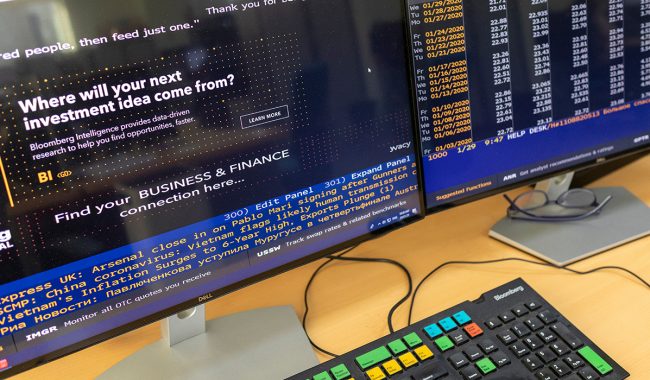
Finance remains one of the most dynamic and influential sectors in the global economy. From multinational corporations raising capital to traders analysing market movements in real time, finance professionals play a critical role in shaping business decisions and economic growth. For students considering a Master in Management and aiming for a career in finance, one question often arises: Should they specialise in Corporate Finance or Financial Markets?
While both fields offer exciting opportunities, they involve different skill sets, professional environments and long-term career paths. Understanding these differences can help future finance professionals make an informed choice and align their studies with their career plans.
At EMLV’s Master in Management programme, students can choose between the Corporate Finance and Financial Markets specialisations, two pathways designed to prepare graduates for distinct yet highly sought-after careers in finance.
Why Choosing the Right Finance Specialisation Matters
The finance industry is evolving rapidly. Digital transformation, artificial intelligence, sustainable finance and increasing regulatory requirements are reshaping traditional roles across the sector. As a result, employers are looking for graduates who possess both strong technical expertise and the ability to adapt to changing market conditions.
Choosing a finance specialisation is therefore more than selecting a set of courses. It becomes an opportunity to identify the professional environment, challenges and responsibilities that best match one’s interests and strengths.
For some students, the excitement of analysing stock markets and investment opportunities is particularly appealing. Others are drawn to strategic financial decision-making within organisations and helping companies grow through mergers, acquisitions and capital investment.
These two perspectives correspond closely to the fields of Financial Markets and Corporate Finance.
What Is Corporate Finance?
Corporate Finance focuses on the financial management of organisations.
Professionals in this field help companies make strategic decisions regarding investments, funding, risk management and long-term growth.
Their objective is simple: to maximise the value of a company while ensuring financial stability and sustainable development.
A typical day in corporate finance may involve:
- Evaluating investment opportunities
- Building financial models
- Conducting company valuations
- Supporting mergers and acquisitions (M&A)
- Preparing business plans
- Analysing financial performance
- Managing corporate financing strategies
Corporate finance professionals often work closely with senior executives, including Chief Financial Officers (CFOs), to guide important business decisions, and graduates can pursue roles such as:
- Financial Analyst
- Corporate Finance Consultant
- M&A Analyst
- Valuation Consultant
- Financial Advisory Associate
- Treasury Manager
- Chief Financial Officer (CFO)
- Transaction Services Consultant
- Investment Analyst
These positions are commonly found within large corporations, consulting firms, investment banks, private equity firms and financial advisory companies.
What Are Financial Markets?
Financial Markets, as a specialisation, focuses on the buying, selling and management of financial assets such as stocks, bonds, derivatives, commodities and currencies.
Professionals working in financial markets operate in highly data-driven environments where decisions are often made based on economic indicators, quantitative analysis and market trends.
Unlike corporate finance professionals, who primarily analyse individual companies, financial markets specialists evaluate broader market movements and investment opportunities.
Their responsibilities may include:
- Portfolio management
- Market analysis
- Trading strategies
- Risk assessment
- Asset allocation
- Quantitative modelling
- Financial forecasting
- Regulatory compliance
Technology has become increasingly important in this field. Today’s financial markets rely heavily on data analytics, algorithmic trading, artificial intelligence and quantitative finance. Students specialising in financial markets may pursue careers such as:
- Portfolio Manager
- Financial Market Analyst
- Trader
- Risk Manager
- Quantitative Analyst
- Investment Consultant
- Asset Manager
- Market Research Analyst
- Compliance Officer
These professionals typically work within investment banks, asset management firms, hedge funds, financial institutions and trading organisations.
Which Skills Are Required for Each Specialisation?
Both specialisations require strong analytical abilities, but the emphasis differs.
Skills for Corporate Finance
Successful corporate finance professionals typically demonstrate:
- Strategic thinking
- Financial modelling skills
- Business analysis
- Communication and presentation abilities
- Negotiation skills
- Problem-solving capabilities
Since many projects involve collaboration with executives and stakeholders, interpersonal skills are particularly valuable.
Skills for Financial Markets
Financial markets professionals often rely on:
- Quantitative analysis
- Statistical reasoning
- Data interpretation
- Risk management
- Mathematical modelling
- Attention to detail
As financial technology continues to transform the industry, programming, data analytics and AI-related competencies are becoming increasingly important.
How EMLV Prepares Students for Both Career Paths
The Master in Management at EMLV offers specialised pathways that combine academic excellence with practical industry exposure.
The Corporate Finance specialisation enables students to master company valuation, financial strategy, auditing, business planning and mergers and acquisitions. Students develop the expertise required to advise organisations on critical financial decisions while gaining exposure to real-world business challenges.
The Financial Markets specialisation, developed in collaboration with ESILV, combines finance, quantitative methods and technology. Students strengthen their understanding of market dynamics, investment management and financial analysis while benefiting from exposure to advanced tools and financial technologies.
Both pathways are delivered in English and are designed to prepare graduates for careers in increasingly international and technology-driven financial environments.
Located in Paris La Défense, Europe’s largest business district, EMLV also provides students with direct access to a vibrant ecosystem of financial institutions, multinational corporations and industry professionals.
Which Specialisation Should Students Choose?
There is no universally “better” choice between Corporate Finance and Financial Markets. The right decision depends on personal interests, professional ambitions and preferred working environments.
Students who enjoy understanding how businesses grow, raise capital and create value may be naturally attracted to Corporate Finance. Those who are passionate about investments, market behaviour and financial innovation may find Financial Markets a better fit.
Ultimately, both paths offer excellent career prospects and provide access to some of the most influential and rewarding roles in modern finance.
Building a Future in Finance with EMLV
The finance sector continues to evolve as technology, globalisation and sustainability reshape the way organisations operate and invest. Future finance professionals will need more than technical expertise; they will require strategic thinking, adaptability and an international mindset.
Through its Master in Management programme, EMLV equips students with the knowledge, practical experience and industry connections necessary to succeed in this changing environment.
Whether their ambition is to advise companies on strategic financial decisions through the Corporate Finance specialisation or navigate global investment opportunities through the Financial Markets specialisation, students can develop the skills needed to build a successful career in finance and contribute to the future of the industry.